

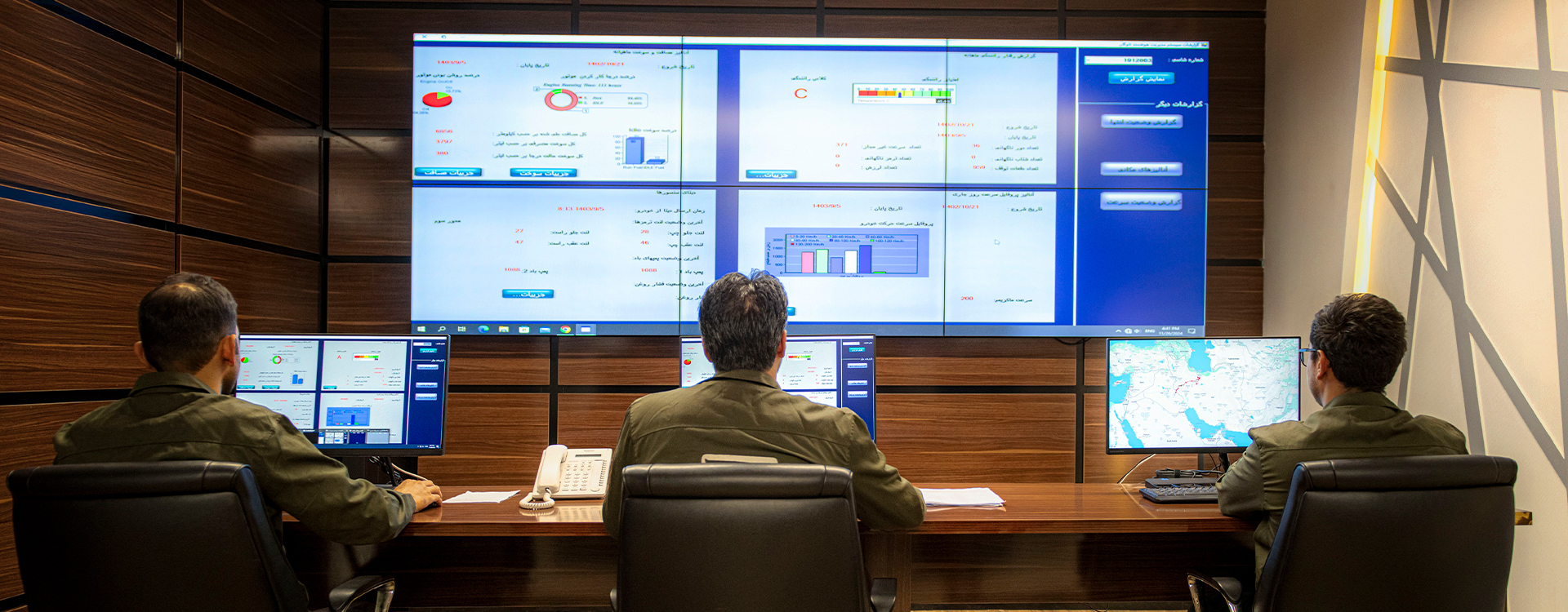
The Fleet Management System (FMS) by Oghab Afshan Company is an integrated and intelligent platform that utilizes advanced technologies to enable comprehensive monitoring and control of vehicle performance, as well as holistic optimization. By collecting and analyzing real-time fleet data, this system helps managers, vehicle owners, and after-sales service centers to make more precise decisions, enhance safety, and significantly reduce operational costs. Indeed, Oghab Afshan’s FMS functions beyond a simple GPS tracker, serving as a digital command center for your entire fleet.
The system provides users with a set of powerful tools, the most significant of which include:
1 - Live Tracking
▪️ Precise Location Tracking: Real-time visibility of each vehicle’s geographic location on a map.
▪️ Route History: Access to comprehensive records of traveled routes, stops, and vehicle speeds over various time periods.
▪️ Geofencing: Definition of permitted travel zones and receipt of instant alerts if a vehicle enters or exits these areas.
2 - Vehicle Performance Monitoring
▪️ Fuel Consumption Analysis: Accurate measurement of fuel usage, identification of high-consumption patterns, and prevention of fuel wastage or theft.
▪️ Vehicle Health Monitoring: Oversight of critical parameters such as engine temperature, RPM, brake system status, and diagnostic trouble codes.
▪️ Smart Periodic Maintenance Management: The system automatically reminds users of periodic maintenance (e.g., oil changes and filter replacements) based on vehicle usage, preventing premature wear.
3 - Driver Behavior Analysis and Evaluation
▪️ Recording High-Risk Driving Events: Detection and reporting of issues such as sudden braking, aggressive acceleration, speeding, or high RPM.
▪️ Driver Scoring System: A scoring structure to evaluate driver performance, encouraging safe and efficient driving.
▪️ Reducing Accidents and Wear: Data from this feature enables managers to provide targeted training, improve driving behavior, and reduce costs related to accidents and repairs.
4 - Integration with Business Processes: Beyond Monitoring
The FMS is not merely a monitoring tool; it acts as a digital intelligence hub, integrating with critical processes of the organization and making them intelligent.
By integrating the FMS with a CRM platform, the customer service unit evolves from a simple response center into a technical consulting hub. This synergy creates a differentiated customer experience and demonstrates the company’s commitment to safety and efficiency.
▪️ 360-Degree Digital Profile for Each Vehicle:
Real-time data from the FMS (e.g., mileage, fuel consumption patterns, diagnostic trouble codes, and service history) is recorded in the CRM system as a customer profile. This provides support specialists with a complete and concise overview of each vehicle’s status, enabling them to offer precise, personalized advice instead of generic responses.
▪️ Smart Notifications and Corporate Social Responsibility:
This feature serves as a prominent distinguishing factor in the integration. The FMS automatically detects critical and safety-related faults, such as severe tire pressure drops or brake system (ABS/EBS) failures, marked as high-priority alerts. Upon detection, an automated notification process is triggered, including an automated VoIP call to the registered owner or driver, verbally communicating the issue and providing initial safety recommendations (e.g., visiting an authorized workshop).
▪️ Application in Roadside Assistance and After-Sales Services:
In case of a technical issue, the roadside assistance team can view the vehicle’s precise location on a map without repeated calls. Technical specialists can analyze diagnostic trouble codes received from the vehicle before dispatch, arriving fully prepared with the necessary tools and parts. This minimizes vehicle downtime.
▪️ Application in Predictive Maintenance and Parts Management:
This capability is one of the most advanced and valuable features of the FMS and shifts maintenance from reactive (post-failure) to predictive (pre-failure). The system continuously monitors the performance data from critical components such as the engine, transmission, brakes, and suspension. By analyzing long-term patterns (e.g., gradual temperature increases, abnormal vibrations detected by sensors, or oil pressure drops) and comparing them to factory standards, the system can predict potential component failures. For instance, if the system determines that a component’s lifespan is nearing its end based on driving patterns and mileage, it can send alerts to the service center and vehicle owner before the driver encounters an issue.